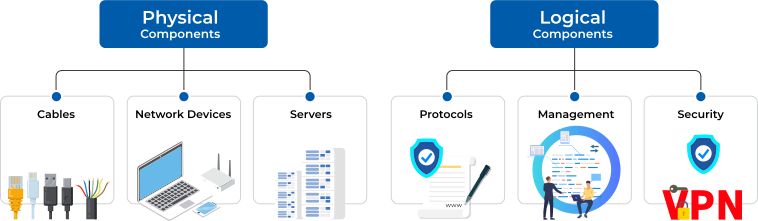
TimeTec offers complete Network Infrastructure solutions alongside our comprehensive PropTech ecosystem, delivering seamless connectivity to support smart building operations. From structured cabling to high-performance network equipment, our infrastructure services are designed to integrate flawlessly with TimeTec’s PropTech solutions—including smart access and elevator control, ELV & IoT automation, smart cashless and touchless parking, visitor management and etc., ensuring a reliable, scalable, and future-ready environment for modern commercial and residential buildings.
What Is a Well-Designed Network Infrastructure?
A well-designed network infrastructure is essential for any organization that relies on technology to operate effectively. It provides the foundation for integrating emerging technologies and new applications, allowing businesses to remain agile, up-to-date, and competitive in their industries.
For service providers, building a robust network infrastructure means ensuring scalability, high availability, and intelligent load balancing. These elements are critical to maintaining seamless connectivity and reliable system performance—key factors in today’s fast-paced digital environment.
Since network interruptions can never be entirely avoided, it's also vital to adopt streamlined network architectures and automated management tools. These help network administrators quickly identify, isolate, and resolve issues, minimizing downtime and ensuring optimal network functionality.
Indian women's lifestyle and culture are a vibrant blend of deep-rooted tradition and modern independence. In a society that is rapidly changing, women often navigate a dual identity—honoring ancient customs while carving out new roles in the workforce and global arts. Traditional Values and Social Structure
The modern lifestyle often incorporates Yoga and Ayurveda, which have been part of Indian culture for millennia. Balancing high-stress jobs with mindfulness is a growing trend among urban women.
The Risks of Explicit Content and Online Predators
From historic queens like Rani of Jhansi to modern pioneers like Kalpana Chawla, the "gentle warrior" spirit defines the Indian woman. She is a bridge between a rich history and a future she is actively reshaping.
Roles and Evolution: Historically, women were expected to prioritize household and caregiving responsibilities. However, urban shifts see women increasingly pursuing higher education and leadership roles while balancing traditional family values.
In India, women are often expected to take on traditional roles, such as managing the household, caring for children, and looking after elderly family members. Many Indian women still follow the traditional practice of being homemakers, while others balance work and family life. Women are also expected to play a significant role in maintaining family traditions, cultural practices, and social norms.
Xwapserieslat Aunty And Boy Hot Malayalam Un Work File
Indian women's lifestyle and culture are a vibrant blend of deep-rooted tradition and modern independence. In a society that is rapidly changing, women often navigate a dual identity—honoring ancient customs while carving out new roles in the workforce and global arts. Traditional Values and Social Structure
The modern lifestyle often incorporates Yoga and Ayurveda, which have been part of Indian culture for millennia. Balancing high-stress jobs with mindfulness is a growing trend among urban women. xwapserieslat aunty and boy hot malayalam un work
The Risks of Explicit Content and Online Predators Indian women's lifestyle and culture are a vibrant
From historic queens like Rani of Jhansi to modern pioneers like Kalpana Chawla, the "gentle warrior" spirit defines the Indian woman. She is a bridge between a rich history and a future she is actively reshaping. Balancing high-stress jobs with mindfulness is a growing
Roles and Evolution: Historically, women were expected to prioritize household and caregiving responsibilities. However, urban shifts see women increasingly pursuing higher education and leadership roles while balancing traditional family values.
In India, women are often expected to take on traditional roles, such as managing the household, caring for children, and looking after elderly family members. Many Indian women still follow the traditional practice of being homemakers, while others balance work and family life. Women are also expected to play a significant role in maintaining family traditions, cultural practices, and social norms.