
To make DJMAX RESPECT mode work, special converter is necessary
To use DJMAX RESPECT mode, the latest firmware is necessary
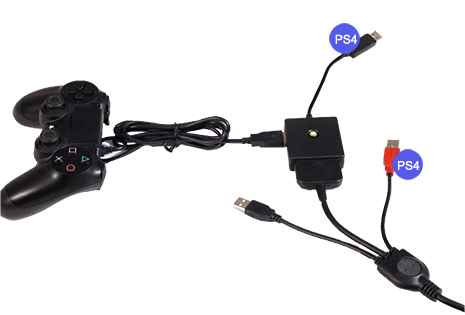
After you connect the controller according to the following steps, you can make DJMAX RESPECT mode work normally.
Converter doesn’t support PS4 PRO game body for the time being.
The blue pilot light of the converter should turn green, and keep shining after flashing about 30 seconds, then you can play game solidsquad catia v5 verified
Press start+select+5, simultaneously about a second, PS2 IIDX mode and DJMAX RESPECT mode of the controller can be switched repeatedly
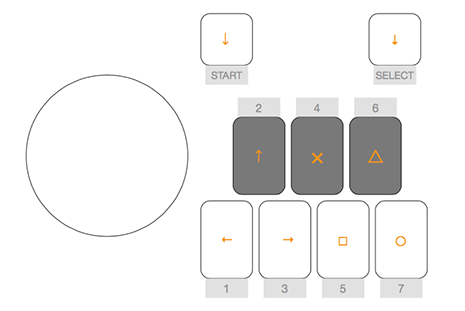
Key mapping is shown as following image
| Controller | PS4 key |
| Start | left stick ↓ |
| Select | right stick ↓ |
| 1 | ← |
| 2 | ↑ |
| 3 | → |
| 4 | × |
| 5 | □ |
| 6 | △ |
| 7 | ○ |
| Rotate turntable clockwise | left stick ↓ |
| Rotate turntable counterclockwise | left stick ↑ |
| Controller | PS4 key |
| Start+Select+4 | Option |
| Start+1 | L1 |
| Start+2 | R1 |
| Start+6 | R2 |
| Start+7 | L2 |
| Start+Select+5 | Switch for PS2 IIDX/DJMAX RESPECT game mode |
The details of the other questions are shown in “Common Question” in the bottom of this page
In the high-stakes world of aerospace, automotive, and industrial design, CATIA V5 remains the gold standard for 3D product lifecycle management. However, even the most powerful native software has bottlenecks—repetitive tasks, batch processing limitations, and clunky data exchange protocols.
Our professor was older than the rest of us, with a quiet face and hands that looked like they had once been used to hold tools instead of pens. He listened. He didn’t exonerate us. Instead, he offered a version of mentorship that felt like forgiveness with conditions: we would help him improve lab access for students who genuinely needed extended time; we would catalog the break we’d used and help the IT team patch that same vulnerability to prevent future misuse. In exchange, he promised to advocate for a lenient outcome. His advocacy mattered. The university accepted a mediated settlement that kept Ana’s record from permanent academic suspension, though it required probation and community service.
A typical "SolidSquad Story" for a user involves several ritualistic steps to ensure the software is "verified" and functional:
In the months after, Ana and I worked to turn the mistake into repair. We wrote scripts that hardened lab machines, documented secure alternatives for student workflows, and organized workshops on ethical computing practices for incoming freshmen. We leveraged our experience into a small start-up idea: a legitimate, low-cost educational licensing program that used virtualized instances to provide more flexible Catia access to students without contravening license agreements. It was naive—ambitious in the way of people who had learned by breaking things—but it was honest.
No updates, no support – Cracked versions cannot install official patches, service packs, or access technical support.
In engineering, the phrase "it works on my machine" is a liability. When you attach the label SolidsQuad CATIA V5 Verified to a component, you are making a legally defensible claim about geometric integrity, parametric behavior, and system performance.