LOADING SEARCH RESULTS
Loading for more accurate data retrieval
WHAT'S NEW
NEW PRODUCT
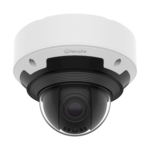
PNV-A7082RZ
4MP AI Outdoor Vandal Dome Camera
NEW PRODUCT
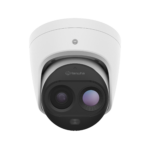
TNM-C2712TDR
Early Fire Detection Bi-spectrum Thermal Camera
You can copy and paste this directly into a blog, forum, or study group.
Answer: c) FPLR
Take a full-length NICET Level 3 Fire Alarm Practice Test with your NFPA 72, NFPA 70, and NFPA 101 open. Do not time yourself. Your goal is to learn where to find the answer within 15 seconds. Tab your books with sticky notes for common sections (e.g., Table 10.6.3.2.3.1, Annex A 17.6, Figure A.17.6.3.1.2). nicet level 3 fire alarm practice test
A) Approve the submittal because 16 VDC is within the listed range. B) Reject the submittal and require a redesign because the design margin is insufficient. C) Issue a field change order to replace the power supply. D) Ignore it because voltage drop calculations are often inaccurate.
Rationale: Photoelectric detectors use light-scattering technology, which is inherently better at detecting larger particles produced by smoldering fires compared to ionization types. ✅ B. 78 dBA You can copy and paste this directly into
Level III focuses heavily on project management. Estimating requires assessing direct and indirect expenses, including shipping distances (freight), rush orders, and material scraps (waste). 4. Correct Answer: C (Motor vehicle showroom)
A well-constructed NICET Level 3 practice test typically covers several key content areas. The first is system design and analysis, including voltage drop calculations, battery capacity sizing, and zoning requirements. The second is codes and standards, where candidates must interpret complex tables and exceptions from NFPA 72 chapters on inspection, testing, and maintenance (Chapter 14) and protected premises fire alarm systems (Chapter 23). The third area is project management and supervision, involving questions about work delegation, quality assurance, and reviewing installation documentation. Finally, the practice test often includes sections on human factors and safety, such as ensuring accessibility for people with disabilities or coordinating with other building systems like fire sprinklers and HVAC. By taking multiple practice tests, candidates can identify their weak points—whether that is performing load calculations or applying occupancy-specific requirements from the International Building Code (IBC). Your goal is to learn where to find
. Because this level has one of the highest failure rates, using a practice test to master codebook navigation—rather than simple memorization—is critical for success. 1. Exam Overview and Structure
Answer: b) To detect and alert occupants of a fire