
Kotler Marketing 6.0 ((better)) Site
Marketing 6.0: The Future Is Immersive Philip Kotler introduces the concept of Metamarketing
However, given the trajectory of Kotler’s work, you are likely looking for a guide that anticipates the next phase—often discussed in advanced marketing circles as the shift from AI-driven marketing to immersive, metaverse, and quantum-conscious marketing. kotler marketing 6.0
Key Pillars of Marketing 6.0
1. The Phygital Convergence
- No distinction between online and offline customer journeys.
- Stores become experience centers; digital platforms replicate tactile sensations.
- Example: Virtual try-ons (AR) combined with instant physical delivery.
Marketing 6.0 demands contextual agility. Your brand must have a "Tone Map," not just a tone of voice. Marketing 6
Digital Marketers: To prepare for a future where traditional digital ads are replaced by immersive, interactive brand experiences. No distinction between online and offline customer journeys
- Augmented Humanity: Wearables and neural interfaces provide real-time, contextual marketing (e.g., smart glasses show nutritional info when you look at a product).
- Spatial Computing: Brands build persistent 3D environments (metaverse stores) that are not games but functional retail spaces.
- Haptic & Sensory Marketing: Digital touch, smell, and texture are transmitted, allowing a customer to "feel" a fabric in a virtual dressing room.
The world of marketing is constantly evolving, and with the rapid advancements in technology and changing consumer behaviors, marketers need to stay ahead of the curve to remain competitive. Philip Kotler, a renowned marketing expert, has introduced the concept of Marketing 6.0, which focuses on creating a sustainable and digital marketing approach. In this article, we will explore the principles of Kotler Marketing 6.0 and what it means for businesses in the future.
marks a significant shift from the technology-focused "Marketing 5.0" to a model centered on immersive customer experiences
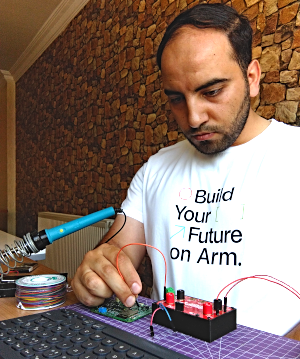
Thanks for the article, Yahya. I just opened EAGLE for the first time in a while and saw the notification with the jump from 7>8. I googled “eagle cad differences version 7 to 8” and this was the first article that came up. It was exactly everything I was hoping to find. Thank you.
You’re welcome Scotte. I’m glad that it was exactly what you’re looking for. even that Autodesk has brought a lot of new features since the time I wrote the article, however you can easily follow the new features in the official website.
Hello Yahya,
Thanks for the article.
What are the reasons to stick around with EAGLE and not switch to Altium, which is pretty well-known as an industry standard software.
Actually nothing 🙂
As an old user of Eagle and personally, I find it time consuming to switch to another CAD tool while the current tool Eagle do the job right now.
Generally, I advise all beginners to start with Altium. It’s indeed professional, but in the same time I think also that Eagle CAD under the heavy development from Autodesk team will have a brilliant future with these steady steps.
Thanks for the question my friend Siraj 😀
By the way: I started tinkering with circuit studio (the hobbyists version of Altium)
Hello Yahya,
Thanks for your article. Can I ask you something?
How can I proceed a part of my .brd design which already finished.
For example, I have preamp and main amp in one .brd where separated with straight line of ground (so its become 2 blocks). Now I intended to proceed that .brd to the next step but only preamp side with FlatCam.
Is it possible? How can I make it?
Warm Regards,
Thank you
Hello Eka
While your design is already separated into 2 blocks, why you just delete the main amp part or to copy the pre-amp part into a new PCB and then process it with FlatCam? Just to understand your case here.